


Toy Triple - 3D Match Puzzle
4.6527.00 Reviews
App Specs
- Version
- 6.7.8
- Updated On
- License
- Free
- Downloads
- 1,000,000+
- Developer
- Skylink Studio
- Categories
- Board
- Platform
- Android
Screenshots
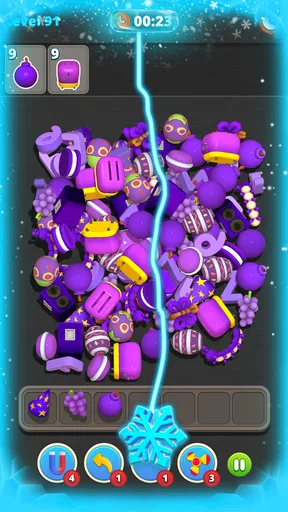
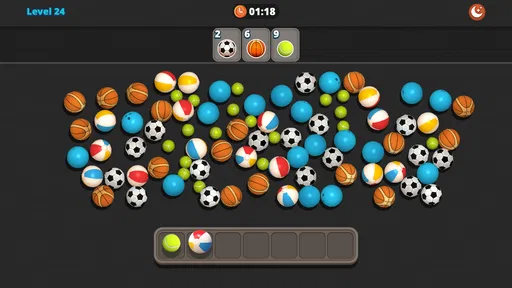
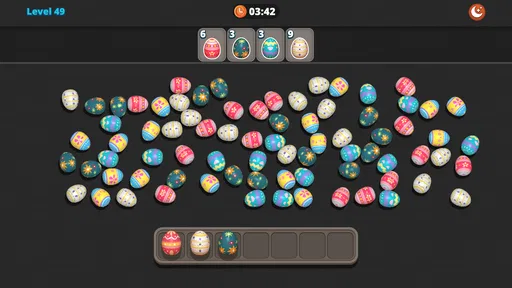
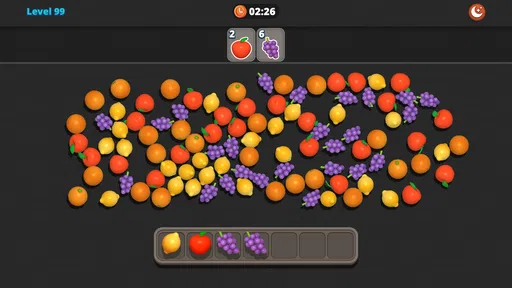
 Analysis by AppCompare
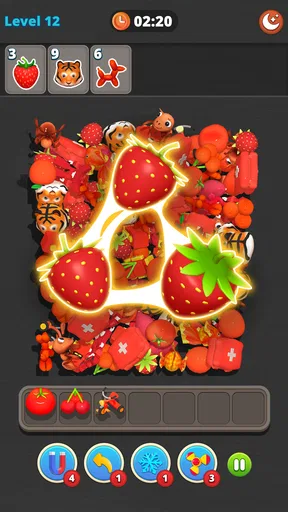
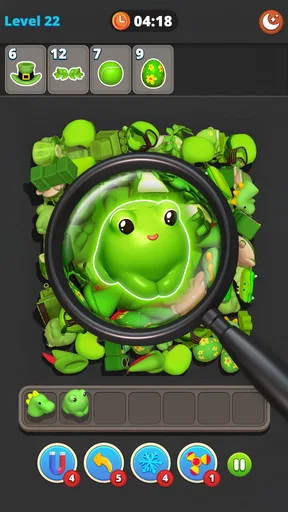
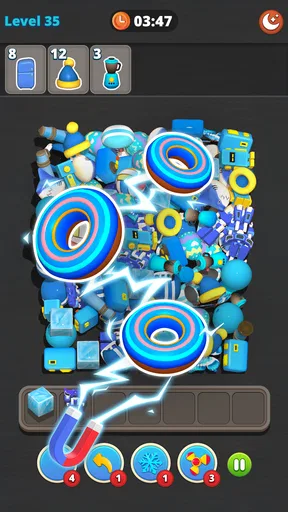
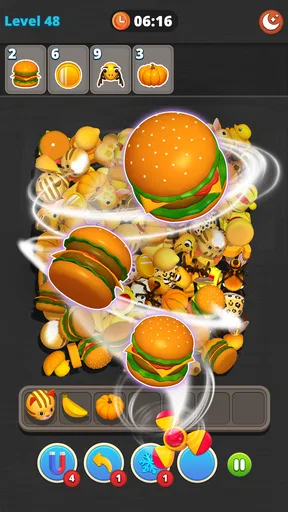
I spent time with Toy Triple - 3D Match Puzzle as a small, casual board game rather than something to play in long, demanding sessions. Its central idea is simple: you look through a group of three-dimensional toy objects, find three matching pieces, and clear them from the board. That familiar matching rule becomes more interesting because the objects have depth, can overlap visually, and need to be inspected from the right angle. In practice, the game is less about fast reactions than about managing attention.
That distinction matters. Plenty of matching games feel interchangeable after a few rounds, but the 3D presentation gives this one a more physical quality. I was not just scanning flat icons in a grid; I was checking what was visible, remembering what might be hidden behind another piece, and deciding whether taking a match now would make the remaining board easier or more confusing. The result is a gentle puzzle routine that can work well when I want something active enough to hold my focus without demanding complete concentration.
Skylink Studio presents it as a free board game for everyone, and that description fits my experience. It is easy to understand without a tutorial-heavy introduction, and the basic interaction becomes comfortable quickly. At the same time, the free entry point comes with optional in-app purchases ranging from $0.99 to $89.99 per item, so I would approach it as a free download with monetization to consider rather than as a completely cost-free experience.
Why the 3D matching idea changes the puzzle
The most important capability here is not simply matching three objects. It is the way the game turns that task into a visual sorting problem. A flat match-three board usually lets me read the whole situation at a glance. Here, the toy-like pieces occupy space, and that changes the order in which I think. I need to identify a possible trio, judge whether the pieces are genuinely available, and consider how removing them will affect the view of the board.
The 3D layout makes every match a small decision about visibility. A match that looks obvious may not be the best first move if clearing another group reveals a more useful combination. This gives the game a mild planning layer without making it feel like a serious strategy title. I found myself alternating between quick matches and slower inspection, depending on how crowded the play area became.
This is also where the game can feel more relaxing than a conventional timed puzzle. The challenge comes from organizing what I see, not from memorizing complicated rules. Someone who enjoys sorting objects, tidying a cluttered desk, or finding patterns in a busy picture may connect with this format immediately. The visual theme keeps the board approachable, while the spatial arrangement prevents the activity from becoming completely automatic.
The capability has a practical effect outside the individual move: it changes the rhythm of play. I can begin with a simple scan, remove an easy trio, pause to reassess, and then continue. That makes the game suitable for short breaks because a single round can feel complete even when I do not have time for a longer gaming session. It also means that playing while distracted is less forgiving than it might be with a very simple tile-matching game.
Worth Reading Before You Choose

EA SPORTS FC Mobile 26 Is a Bigger Football Game, but It Takes Time

Flipboard Shows What News Apps Must Do Beyond the Feed

Switching to Android Auto Means Rethinking Your Driving Routine

Google Calendar Makes a Crowded Week Easier to Manage

Ludo King Makes the Most of the Minutes Between Plans

Baby Panda World Brings Quick Play to Modern Phones, but Its Game Library Feels Busy
What I actually look for before tapping
My first habit was to search for the most visible set of three. After a while, I found that this is not always the smartest approach. I get better results by checking whether a match is isolated or surrounded by similar pieces. If removing one group exposes another object that completes a trio, the move has more value than a match that merely reduces the current clutter.
I also try not to focus on one corner for too long. The three-dimensional arrangement encourages tunnel vision because a promising object can draw attention away from the rest of the board. A quick scan across the entire play area helps me notice pairs that are waiting for a third piece and prevents me from spending too many moves on a visually convenient but strategically awkward group.
Another useful adjustment is to treat the board as a changing picture rather than a fixed puzzle. Every cleared trio alters what I can see. When I remember that, I am less likely to commit to a plan based only on the opening layout. This is one of the more interesting consequences of the 3D design: the best decision often depends on what becomes visible next, not just on what is already in front of me.
How the game feels during ordinary play
The controls are straightforward enough for casual players. The main work is selecting matching objects, so the learning curve is light. I did not need to study a complicated rule set before understanding the goal. That accessibility supports the Everyone age rating, although younger players may still need help with crowded layouts or with resisting optional purchase prompts if they are using a shared device.
The store identifies it as Toy Triple, while the full title is Toy Triple - 3D Match Puzzle. I mention that because the shorter name describes the core activity well, but the longer name better explains what separates it from ordinary matching games. The toy presentation is not just decoration; it helps communicate that the board is built around recognizable objects arranged in a shared space.
As a free game, it is easy to try without making a commitment. I would recommend starting with a few sessions before deciding whether it deserves a permanent place on a phone or tablet. The strongest test is whether the visual search feels satisfying to you. If you enjoy the moment of spotting a hidden trio, the format has a pleasant loop. If you prefer direct competition, deep planning, or a story that carries you from one session to the next, the same simplicity may feel limiting.
The current version is 6.7.8, and the game supports devices running Android 7.0 or later. That makes it accessible to people who are not using a recent phone, though the exact feel will still depend on screen size and performance. On a smaller display, the 3D objects can become harder to distinguish when the board gets busy. A larger screen gives me more room to inspect the arrangement and tap accurately, so tablet users may find the presentation especially comfortable.
A realistic way to use it in a day
My favorite use case is a short waiting period: sitting in a café before meeting someone, waiting for a train, or taking a brief mental break between tasks. I can open it, play until I feel ready to return to what I was doing, and close it without needing to remember a complicated plot or rebuild a long strategy. The matching task gives my mind something concrete to do while still leaving the session fairly approachable.
It also works as a transition game. After a long stretch of reading or computer work, I sometimes want an activity that changes the kind of attention I am using. Looking for toy groups in a spatial layout feels different from reading text or scrolling through feeds. I would not claim that it improves concentration in a clinical sense, but it does provide a focused visual task that can make a short break feel more intentional.
There is a trade-off in that convenience. Because the game is so easy to start, it can also be easy to keep opening for “one more” round. I would set a natural stopping point if I were using it during work or study. The relaxed format does not automatically make the time disappear; it simply makes continued play feel effortless.
Small techniques that improve the experience
For crowded boards, I find it useful to clear the most obvious trio first only when it improves visibility. If the group is blocking several other pieces, removing it can open the board and make the next decisions clearer. If it sits harmlessly at the edge, I may leave it while I search for a match that affects the center. This is a simple distinction, but it makes the 3D layout feel more manageable.
I also avoid tapping rapidly when two objects look similar. The spatial presentation can make a piece appear available when another object partially covers it. Slowing down for a moment reduces accidental selections and helps me keep track of which items are truly part of a possible trio. This is especially useful for players with smaller screens or anyone who tends to play one-handed.
A third technique is to remember pairs rather than trying to memorize the entire board. When I see two matching toys with no immediate third, I mentally mark their location and continue scanning. After one section clears, the missing piece may become visible. This approach uses less mental effort than holding every object in memory and fits the game’s gradual reveal of the board.
Where the relaxing design has limits
The biggest limitation is that the core loop remains narrow. Matching three objects is pleasant, but it does not offer the variety of a board game with multiple rule systems, a campaign, or meaningful player-versus-player interaction. If I want a game that rewards long-term planning across many different mechanics, I would choose a traditional strategy board game or a deeper digital adaptation instead.
The 3D presentation can also create visual friction. Depth adds interest, but it may make the board harder to read than a flat arrangement. Objects can compete for attention, and the most important piece is not always the one that stands out first. That is part of the challenge, yet it can become tiring when I am already mentally fatigued. The game relaxes me most when I am willing to inspect the board; it is less relaxing when I want instant, effortless progress.
Monetization is another point to consider. The game is free, but optional purchases are available, with individual items priced from $0.99 up to $89.99. I would not hand the device to a child without discussing purchase controls first. Adults who are comfortable playing without buying anything can treat the store as an optional part of the experience, but anyone sensitive to prompts or progression pressure should pay attention to how that affects their enjoyment.
The rating profile suggests that many players find the game approachable: it holds a 4.6 average from around 21 thousand ratings, alongside more than 500 written reviews. That is useful context, but it does not remove the personal question of whether this particular puzzle rhythm suits you. A high average can tell me that the concept works for a broad audience; it cannot guarantee that the 3D clutter, pacing, or purchase structure will match my preferences.
It is also worth separating “brain training” from serious cognitive software. I can see why the game may feel mentally engaging because it asks me to scan, compare, and plan around visibility. Still, I would use it as a casual puzzle for attention and relaxation, not as a substitute for a structured learning tool or a scientifically designed training program. That expectation keeps the experience enjoyable and avoids asking it to be something it is not.
Who should choose another kind of game
I would skip this one if my priority is social play. There is no reason to choose a solitary 3D matching routine over a multiplayer board game when the main goal is conversation, competition, or shared decision-making. I would also look elsewhere if I need a game that can be played almost entirely on autopilot; the visual inspection is the point, and crowded layouts deserve attention.
Players who dislike free-to-play structures may prefer a paid puzzle with a single upfront purchase and fewer commercial interruptions. Likewise, people who find small objects difficult to distinguish may enjoy a cleaner, high-contrast tile game more than this toy-filled presentation. The game’s strongest feature is also the source of its main weakness: depth makes the board distinctive, but it can make clarity less immediate.
Who gets the most from Toy Triple
I think the best audience is someone who wants a calm, visual puzzle that can be picked up in short sessions. It suits players who enjoy sorting, pattern recognition, and the satisfaction of gradually clearing a messy arrangement. It is also a good fit for casual gamers who do not want to learn a complex system before having fun.
Families may find the Everyone rating reassuring, but I would still treat the purchase settings seriously. The rules are easy to explain, and the toy theme is approachable, yet younger players may focus on tapping matches without understanding why some moves are better than others. Playing together for a few rounds can turn that into a small exercise in observation: ask them to find pairs first, then decide which trio should be cleared.
For adults, the strongest benefit is flexibility. I can use it as a five-minute distraction, a visual reset after desk work, or a quiet activity before bed, provided I am not tempted to extend the session indefinitely. It does not require the emotional investment of a story game, and it does not punish me for forgetting a complicated system between visits. That makes it easier to fit around an irregular schedule.
The game has reached over one million installs, which matches its broad, accessible design. I would not interpret that as a reason to download it automatically, but it does reinforce the idea that this is built for a wide casual audience rather than a specialist puzzle community. Skylink Studio keeps the entry point simple, and the 3D matching concept supplies enough extra texture to distinguish it from a plain tile-clearing exercise.
My recommendation after playing
I recommend it with a clear condition: download it if the idea of searching a three-dimensional toy pile sounds satisfying, not because you expect a deep board-game system. The game’s best moments come from noticing a hidden relationship between pieces, clearing a blocking trio, and watching the board become easier to read. Those moments are modest, but they are exactly what make the experience pleasant.
I would start without spending money and pay attention to two things: whether the board remains comfortable to read on your device and whether the optional purchase structure bothers you. If both are acceptable, the free format gives you a low-risk way to build it into your break routine. If you want richer strategy, direct competition, or a more transparent paid experience, another board or puzzle game will probably serve you better.
Overall, Toy Triple - 3D Match Puzzle succeeds because its defining idea affects how I play rather than merely changing the artwork. The three-dimensional arrangement makes matching more deliberate, encourages useful scanning habits, and gives short sessions a satisfying sense of progress. It is not a universal recommendation, but for anyone who likes calm visual challenges and wants a board game that feels a little more spatial than the usual match-three format, it is a worthwhile free option to try.
Pros
- Relaxing gameplay suitable for short sessions
- Bright 3D visuals make objects easy to recognize
- Helpful boosters assist with difficult levels
- Regular level progression keeps the challenge engaging
- Simple controls are accessible for most players
Cons
- Some levels can feel heavily dependent on luck
- Boosters may become scarce without watching ads
- Later stages can take several attempts to complete
- Frequent ads may interrupt the gameplay flow
- The core matching mechanic may feel repetitive over time
FAQs for Toy Triple - 3D Match Puzzle
What is Toy Triple - 3D Match Puzzle?
Toy Triple - 3D Match Puzzle is a casual matching game built around colorful three-dimensional objects. Your goal is to find and select three identical toys or items before the board fills up. The game combines simple tap controls with visual organization and light strategy, making it easy to start but increasingly challenging as more objects, limited spaces, timers, and special stages are introduced.
How do you play Toy Triple - 3D Match Puzzle?
To play, look across the 3D pile and tap three matching objects to place them into the collection area. When a complete trio is formed, those items disappear and create room for new matches. You need to plan your selections carefully because the available slots are limited. Random tapping can quickly block useful combinations, so it is better to scan the entire board and prioritize accessible triples.
Is Toy Triple - 3D Match Puzzle free to download and play?
Toy Triple - 3D Match Puzzle is generally available as a free download, allowing players to begin without paying an upfront purchase price. However, the game may include optional in-app purchases, advertisements, or rewarded videos that provide extra hints, shuffles, lives, or other advantages. Before downloading, check the store listing for the current pricing, advertising details, and purchase information for your device.
Does Toy Triple - 3D Match Puzzle require an internet connection?
Many levels in Toy Triple - 3D Match Puzzle can usually be enjoyed as a casual offline experience, which is convenient when traveling or when mobile data is unavailable. Nevertheless, certain features may depend on an internet connection, including advertisements, daily rewards, online events, cloud synchronization, or purchases. Availability can vary by version and platform, so test the game offline after installation if this matters to you.
Is Toy Triple - 3D Match Puzzle suitable for children and casual players?
The basic matching mechanics are straightforward and suitable for casual players who enjoy relaxed puzzle games, colorful visuals, and short sessions. Younger children may also understand the controls quickly, but parents should review the app’s age rating, advertising, and in-app purchase settings before allowing unsupervised play. Later levels may require patience, visual attention, and planning rather than reflexes, so difficulty can vary considerably.


